BMS air-handling
and sensor analytics.
A unified view of AHU and chiller operational performance, energy consumption, and fault detection across airport facilities — driving faster issue resolution and measurable energy savings.
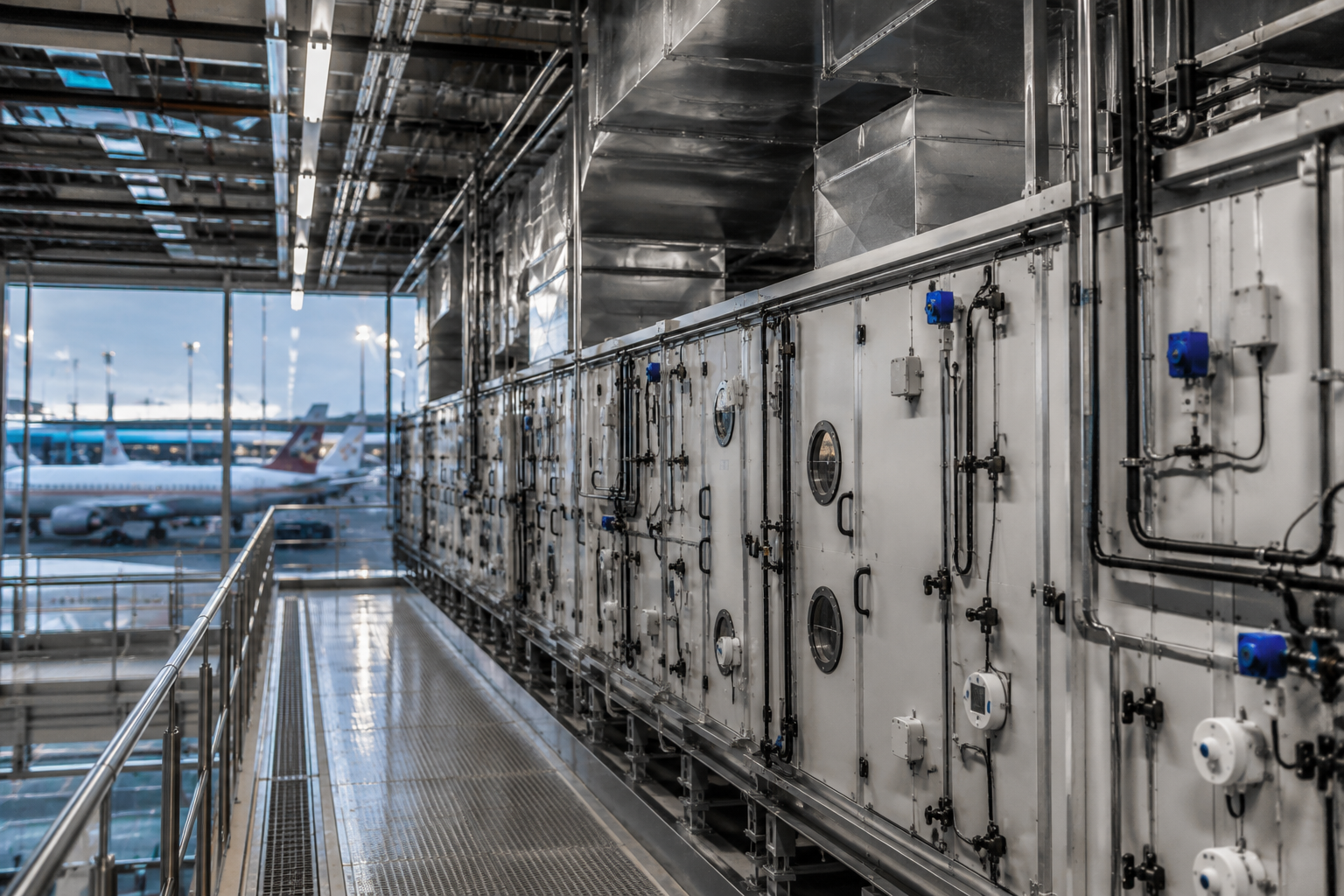
No single view of HVAC efficiency. Faults caught late.
No single view of AHU and chiller operational efficiency or energy consumption — resulting in missed energy savings opportunities, delayed fault detection, and limited visibility into building system performance across the terminal.
Sensor telemetry to KPIs. Faults to alerts. Vendor-agnostic by design.
BMS vendor APIs feed sensor telemetry (temperatures, pressures, power), chiller runtimes, AHU status, and fault events — combined with utility meter readings and asset metadata. The analytics layer surfaces efficiency KPI dashboards and fault trend reports for maintenance and operations teams.
Sensor telemetry tracking
Real-time and historical temperature, pressure, and power readings from AHUs and chillers across the terminal.
Chiller COP & kWh/ton
Coefficient of Performance per chiller and energy per ton of cooling tracked against utility meters — surfacing efficiency degradation early.
Fault detection & alerting
Automated alerts for anomalous sensor readings or fault events enable faster response and reduce downtime.
Runtime & fault trends
AHU and chiller runtime hours and fault counts trended over time to support planned maintenance cycles.
Any BMS vendor. One efficiency view.
The analytics layer ingests sensor telemetry from any BMS vendor (Metasys/JCI, Siemens Desigo, Schneider EcoStruxure, and others) via API or MQTT/BACnet bridge — also serving as a template for broader sensor and camera analytics across the terminal.
From efficiency blind-spot to measurable savings.
Energy savings
Typical range delivered by chiller and HVAC monitoring programmes.
Downtime
Faster fault response reduces equipment outage.
Single efficiency view
AHUs, chillers, energy, faults — all in one dashboard.
Planned maintenance
Runtime and fault trends support maintenance cycle planning.