Airport vehicle movement &
kerbside management.
Computer vision detecting vehicles, queues, and dwell times at kerbside — plus airport-wide ANPR tracking from entry to exit, correlated with flight schedules, weather, and operational events.
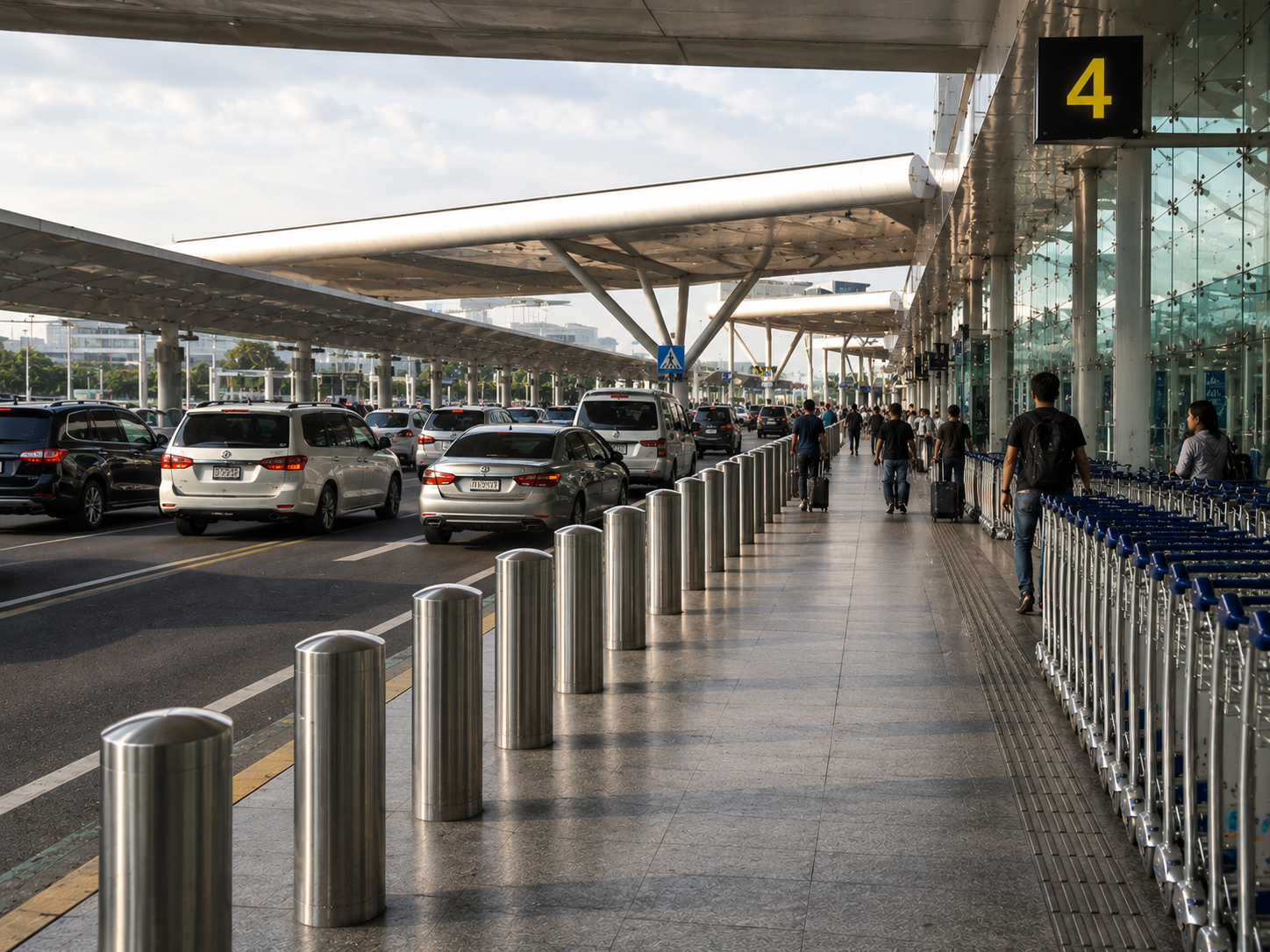
Congested kerbsides. Disconnected datasets.
Major airports face constant challenges managing vehicle flow, congestion, and operational efficiency across extensive road networks. One airport needed to address congestion at passenger drop-off zones, where inconsistent traffic patterns and limited real-time visibility caused delays and safety issues. Another sought a comprehensive understanding of all vehicle movements across the entire precinct, but lacked integrated, reliable data linking traffic activity to flight schedules, weather events, and operational disruptions.
Kerbside first. Then the whole precinct.
For kerbside operations, computer vision detected vehicles, measured queue lengths, monitored dwell times, and identified congestion points throughout the day — streamed into real-time dashboards. For the airport-wide solution, vehicles were classified, identified via ANPR, and tracked from entry to exit across multiple camera zones, with visual insights stitched into operational data on a unified analytics platform.
Kerbside vehicle detection
Computer vision measured queue lengths, dwell times, and congestion points at drop-off zones.
Real-time dashboards
Insights streamed into operational dashboards for faster, data-driven responses.
Airport-wide ANPR
Vehicles classified by type and identified via licence-plate recognition across multi-zone tracking.
Operational correlation
Visual insights stitched with flight schedules, weather, and operational events for scenario modelling.
From kerb to gate, every vehicle visible.
Eye4.ai's vehicle analytics span kerbside dwell-time monitoring to full airport-wide ANPR — joined with operational data for executive-grade decisions on safety, flow, and resource allocation.
Kerb congestion, reduced.
Decisions, made on data.
Kerbside congestion
Faster, data-driven responses cut congestion at drop-off zones.
Operational correlation
Vehicle activity linked to flight schedules to anticipate peak-hour stress.
Scenario planning
Traffic management scenarios modelled before being applied in real conditions.
Executive insight
Decisions based on factual, historical, and predictive data — not guesswork.